Jewel Craze: Match 3 Puzzle
- 4.9
- Rating
- 100.00K
- Installs
- Free
- Price
 Analysis by App-foxy
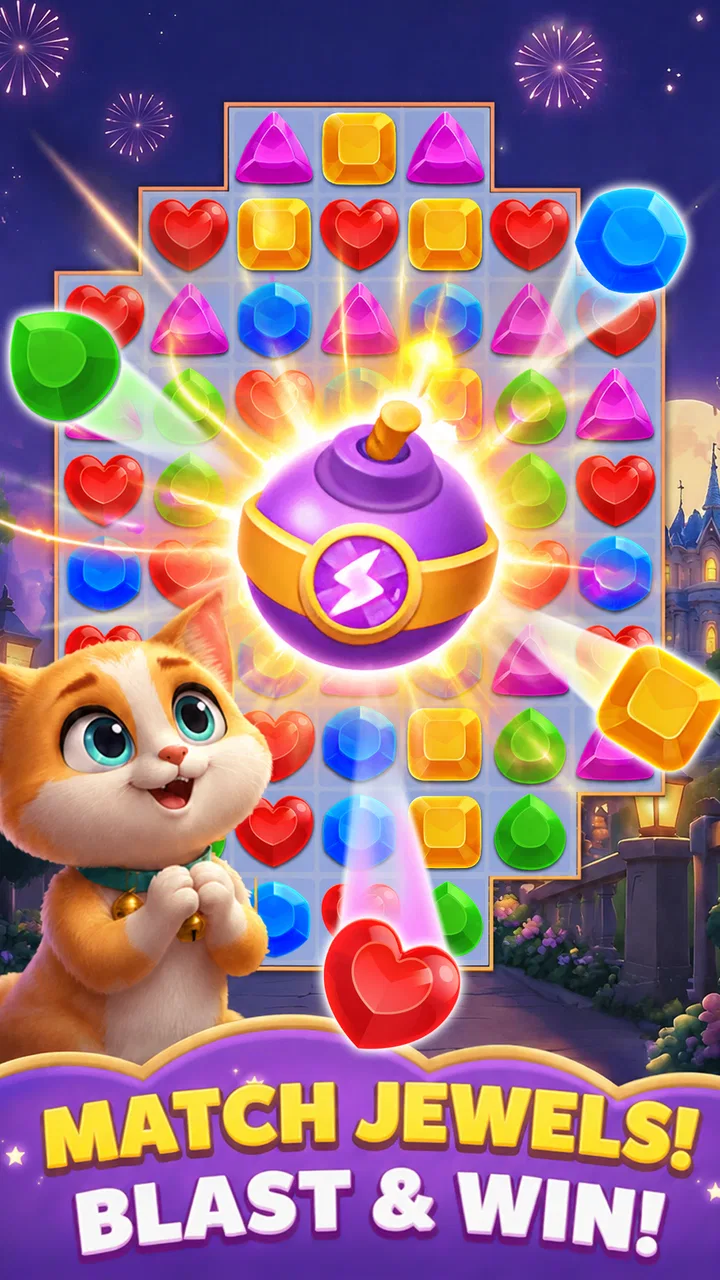
I spent time with Jewel Craze: Match 3 Puzzle as a light, easy-to-pick-up game, and its appeal is clear from the first few rounds: it turns short breaks into simple gem-matching sessions without asking me to learn a complicated control scheme. Developed by SOFISH GAMES, this casual game is built around matching gems, creating combos, and moving through a large collection of levels. It is free to start, aimed at Everyone, and available for Android devices running version 6.0 or later.
That basic formula is familiar, but familiarity is part of the point. I can open it when I have only a few minutes, make progress without planning a long session, and put it down without losing the whole evening. The important question is not whether the match-three format is new; it is whether this particular version gives enough satisfying play for its cost and whether its limitations become annoying over time. My answer is generally positive, with a few sensible cautions about spending and long-term variety.
How the game feels in everyday play
The central loop is straightforward: I look for groups of matching gems, make a move, and try to create combinations that clear more of the board. That makes the game immediately approachable for someone who has never played a puzzle title, while still giving experienced match-three players a familiar space to think about the order of their moves. The best moments come when one match triggers another and the board clears more dramatically than expected.
You May Also Like

 AccuWeather: Weather Radar
AccuWeather Review: A Quick, Clear Forecast for Everyday Decisions
For everyday plans, the best forecast is the one you can understand quickly. AccuWeather makes rain timing, radar, and local conditions easy to act on, with a few trade-offs.

 Hill Climb Racing
Why Hill Climb Racing Still Turns Crashes Into One More Run
A tiny car, a bumpy hill and one more upgrade: Hill Climb Racing keeps resurfacing because its simple chaos makes every near-miss feel personal.

 AliExpress - Shopping App
AliExpress Makes Global Shopping Feel Personal, but Shoppers Bear the Risk
AliExpress turns a global marketplace into a pocket-sized discovery engine. Its reach is useful, its shopping loop compelling, and its trade-offs easy to miss.

 Lords Mobile: Kingdom Wars
Lords Mobile Is a Kingdom-Building Routine, Not a Quick Match
A case-by-case verdict on the building, battles, device demands, and social commitments that make Lords Mobile rewarding for some players and exhausting for others.

 PDF Scanner app - TapScanner
TapScanner Makes Paperwork Easier to Capture, Check, and Share
TapScanner makes scanning with a phone feel less like a rescue operation and more like a dependable step in getting work done. Its capture tools are useful, though not flawless.

 Block Blast!
 Shows How Much a Puzzle Game Can Leave Out
A quiet grid game shows why puzzle players increasingly value instant clarity, repeatable skill and low-pressure play—and where the genre still needs to catch up.
More From Our News Desk
View All News


I found the game particularly suitable for small gaps in the day. Imagine waiting for an appointment or taking a short break between tasks. A game like this works because I do not need headphones, a long tutorial session, or a detailed explanation before starting. I can complete a little progress, stop, and return later when I want another distraction. That convenience is more valuable here than any claim of deep storytelling or complex strategy.
The large level count also changes the way I approach it. Instead of treating each round as a standalone activity, I can use it as a continuing routine, gradually working through the available challenges. The store summary presents the experience as a journey through thousands of levels, so the intended appeal is clear: steady progression rather than a short game that ends after a handful of puzzles.
Still, a long level journey does not automatically mean endless freshness. Match-three games depend heavily on how well their boards, objectives, and difficulty curve keep the player interested. I enjoyed the immediate satisfaction of clearing gems, but anyone expecting a radically different experience from one stage to the next should keep expectations realistic. The strength is accessibility and repeatability, not a completely new puzzle language.
Why the first sessions are easy to enjoy
The low barrier to entry is one of the game’s strongest qualities. The controls are based on familiar touch gestures, and the visual goal is easy to understand: make useful matches and clear the board. I did not need to spend much time learning rules before feeling that my decisions mattered. That is exactly what I want from a casual mobile game when I am tired or simply looking for something uncomplicated.
There is also a useful balance between quick decisions and occasional planning. A random move may clear a few gems, but looking for a better sequence can produce a stronger result. I recommend taking a moment to scan the whole board before touching it, especially when several possible matches are available. The most useful match is not always the most obvious one; preserving space for a follow-up combination can be more rewarding than clearing the first group I notice.
That small habit is one of the better ways to make the game feel less automatic. Instead of tapping as soon as I see a match, I check whether a move near the bottom, edge, or center could open more of the board. This is not a complicated strategy system, but it gives ordinary rounds a little more thought and helps prevent the experience from becoming pure repetition.
What free access really means here
The game itself is free to download and play, which makes trying it a low-risk decision. I can see whether the visual style, pace, and level structure suit me before paying anything. That is important in a crowded casual category where many games look similar in a store listing but feel quite different after several sessions.
There are in-app purchases ranging from $0.99 to $99.99 per item. That range is worth taking seriously. Free access can offer good value when I am comfortable progressing at the game’s intended pace, but the presence of high-priced purchase options means I would avoid treating every offer as a harmless small add-on. Before confirming a purchase, I would check the amount carefully and decide whether it improves my enjoyment or merely removes a temporary obstacle.
For me, the sensible approach is to begin as a completely free player. I would only consider spending after establishing that I genuinely enjoy returning to the game, and even then I would set a personal limit. The free entry point is a strength; it does not make every optional purchase good value. Those are separate questions, and they should be judged separately.
Where the value comes from
The main value is the amount of casual entertainment I can get without an upfront payment. Jewel Craze works well as a background game for people who enjoy gradual progress, short challenges, and the simple pleasure of making a board collapse through a well-timed match. Its 4.9 average from around 1.1 thousand ratings suggests that early players have responded very positively, while more than 100 thousand installs show that it has already reached a meaningful audience.
I would not measure its value by comparing it with a premium puzzle game that charges once and avoids purchase prompts. A paid game may offer a more contained experience, clearer ownership, or a different approach to progression. This title is better understood as a free starting point: I can enjoy it without paying, then decide whether optional spending fits my habits. If I never buy anything, it can still serve its purpose as a convenient casual diversion.
The game is also a reasonable choice for households looking for an Everyone-rated title. That rating makes it easier to consider for a broad audience, although I would still supervise spending on a shared device. Age suitability and purchase suitability are not identical. A game can be appropriate for general audiences while still requiring an adult to manage payment settings and expectations around optional items.
The tradeoffs that become clearer with time
The familiar design is both an advantage and a limitation. I can understand it immediately, but I am not getting a radically different kind of puzzle experience. If I already play several match-three games, this one may feel more like another comfortable option than a replacement for my favorite. Its success depends on whether I enjoy this particular presentation and progression flow enough to keep returning.
Another tradeoff is the relationship between free play and optional purchases. Someone who wants to move through stages quickly may be tempted to spend when progress slows or when a difficult board becomes frustrating. That can make the game less relaxing, especially if I start measuring enjoyment by how fast I advance rather than by the quality of each puzzle. I prefer to treat a difficult level as a reason to pause and return later, not as an automatic reason to buy help.
There is also a difference between a game that is good for short sessions and one that can hold attention for hours. Jewel Craze is strongest in the first role. I would recommend it for a few rounds at a time, but I would not choose it as my main game if I wanted a rich narrative, competitive depth, or a large set of unrelated activities. Its focused design is convenient, but it naturally narrows the kind of entertainment it can provide.
The current version is 1.0.18, and the game was released on January 12, 2026. Those details matter mainly because players should keep the app updated through the normal platform process when a newer version becomes available. I would not judge the whole experience by expecting a mature, constantly changing live-service game; the sensible evaluation is whether the current puzzle loop is enjoyable on its own.
Practical ways to get more from each level
My first tip is to avoid spending the opening moves too quickly. I scan for matches that create room, not just matches that disappear immediately. A move that opens a crowded section can be more useful than a move that produces a small clear in an already open area. This is especially helpful when the board offers several equally obvious choices.
My second tip is to use short sessions deliberately. When I play while distracted, I tend to make careless moves and then blame the level for feeling difficult. Playing two or three rounds with full attention works better than trying to grind through a long sitting. The game’s casual nature makes this easy: it does not need to become a daily obligation to be worthwhile.
My third tip concerns purchases. I would never buy immediately after failing once. I would first replay the level with a different opening, look for matches that affect the most crowded area, and take a break if I am rushing. If I eventually decide to spend, I would choose a small, clearly understood purchase rather than jumping toward the most expensive option. The free entry point gives me enough room to test whether any paid help genuinely improves my experience.
A fourth useful habit is to decide what kind of player I am before progressing too far. If I enjoy solving boards slowly, I can accept occasional friction as part of the challenge. If I care mainly about speed and uninterrupted advancement, the free model may become less comfortable. Recognizing that difference early prevents me from judging the game unfairly for not serving a play style it was never meant to prioritize.
Who is most likely to enjoy it
I think this is a good fit for someone who wants a familiar casual puzzle that can be played in brief bursts. It suits players who like visible progress, simple touch controls, and the satisfaction of chaining matches without having to manage a complicated character, story, or multiplayer system. It is also a sensible first try for someone who has not settled on a match-three game yet, because the free starting point makes experimentation easy.
It may also work well for families who want an Everyone-rated game on a compatible Android device, provided an adult handles purchase controls. The broad age rating and straightforward interaction make it approachable, but I would still explain that optional purchases cost real money. That conversation is more useful than assuming a free download means the entire experience has no financial decisions attached.
I would skip it if I am looking for a premium puzzle with a clearly finished structure and no optional spending to consider. I would also look elsewhere if I need competitive matches, a strong narrative, or a constantly changing set of mechanics. A dedicated strategy title may be better for someone who wants deeper planning, while a premium one-time purchase may be preferable for someone who dislikes free-to-play purchase ranges altogether.
My buying decision
My recommendation is to try the free version first. It offers the right kind of value for a casual player who wants quick gem-matching sessions and gradual progress without paying upfront. The strong average rating and growing install base make it worth a look, but neither should replace my own test of the controls and pacing. Ten minutes of personal play tells me more than a number on a store page.
I would keep my expectations focused: this is a casual match-three game, not a deep strategy adventure. Its best qualities are its immediate accessibility, short-session convenience, and long progression path. Its main compromises are the familiar nature of the formula and the possibility that optional purchases may affect how comfortable progression feels for players who want to move quickly.
For my own use, I would keep playing without spending at first and decide later whether the enjoyment justifies a small optional purchase. I would not recommend the most expensive purchase simply because it is available, and I would not tell every player that spending is necessary. The strongest value is the free trial of the full basic idea, not an assumption that paid items automatically improve it.
In the end, Jewel Craze: Match 3 Puzzle is an easy recommendation for relaxed puzzle fans who want something familiar, accessible, and convenient on Android. It is less convincing for players who want originality, deep systems, or a completely purchase-free experience. If your ideal mobile game is a few satisfying matches during a spare moment, SOFISH GAMES has made a pleasant option to test. If you want a richer or more self-contained puzzle experience, I would compare it with a premium alternative before committing your time or money.
FAQs for Jewel Craze: Match 3 Puzzle
01What is Jewel Craze: Match 3 Puzzle?
Jewel Craze: Match 3 Puzzle is an engaging mobile game where players match colorful jewels to complete levels and achieve high scores. It offers various challenges and power-ups to enhance gameplay, making it suitable for both casual gamers and puzzle enthusiasts.
02Is Jewel Craze: Match 3 Puzzle free to play?
Yes, Jewel Craze: Match 3 Puzzle is free to download and play. However, it contains in-app purchases that allow players to buy additional items or lives, which can enhance the gaming experience. These purchases are optional and not necessary to progress through the game.
03What are the system requirements for Jewel Craze: Match 3 Puzzle?
Jewel Craze: Match 3 Puzzle requires a device running Android 5.0 or iOS 10.0 and above. It is designed to work on most smartphones and tablets, providing a seamless gaming experience across different devices. Ensure your device has sufficient storage and is updated to meet compatibility needs.
04Are there any ads in Jewel Craze: Match 3 Puzzle?
Yes, Jewel Craze: Match 3 Puzzle includes ads, which help keep the game free to play. Ads may appear between levels or during gameplay. Players have the option to remove ads by making an in-app purchase, providing an uninterrupted gaming experience.
05Can I play Jewel Craze: Match 3 Puzzle offline?
Jewel Craze: Match 3 Puzzle can be played offline, allowing players to enjoy the game without an internet connection. However, certain features, like in-app purchases and leaderboard updates, require an internet connection to function properly.
Pros
- Engaging and colorful graphics.
- Smooth and user-friendly interface.
- Variety of challenging levels.
- Frequent updates with new content.
- No intrusive ads during gameplay.
Cons
- In-app purchases can be pricey.
- Limited lives can slow progress.
- Requires internet for some features.
- Occasional lag on older devices.
- No multiplayer mode available.

Jewel Craze: Match 3 Puzzle
Gallery